Rainbow Six Siege Ranked 3.0 Explained – Complete Ranked System Guide

0

Exclusive cheats for your favorite games, offering premium features and reliable performance to level up your gameplay.


Rainbow Six Siege Ranked 3.0 is a complete overhaul of the competitive ranking system. It was introduced to make player skill easier to understand, improve matchmaking, reduce extreme differences between squad members, and make every Ranked match feel more rewarding.
The biggest change is simple: your visible Rank is now treated as your actual competitive skill. The hidden MMR system used during Ranked 2.0 has been removed from Ranked matchmaking, meaning players no longer have one Rank displayed on their profile while being matched through a separate invisible rating.
Ranked 3.0 also introduces five Placement Matches, Rank Point-based matchmaking, new squad restrictions, five Champion divisions, an expanded Competitive Rewards track, and updated seasonal progression.
This guide explains everything you need to know about Rainbow Six Siege Ranked 3.0, including how placements work, how RP is calculated, what determines your opponents, and how to rank up more consistently.
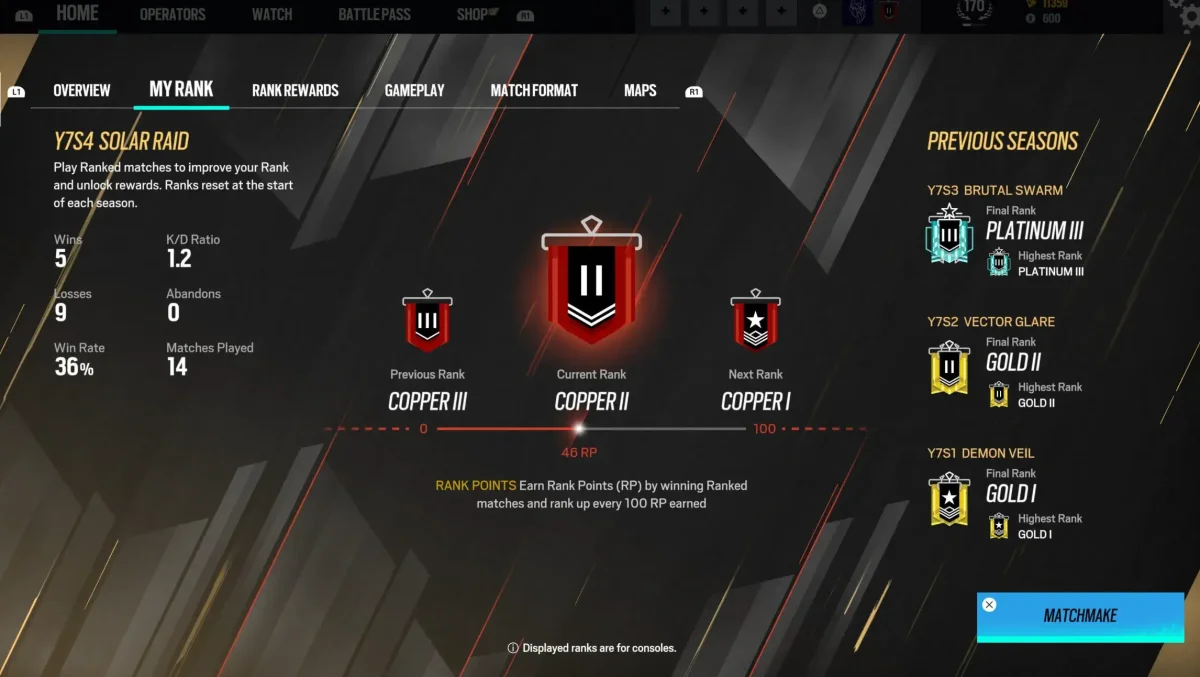
Ranked 3.0 is the updated Rainbow Six Siege competitive system in which your Rank and Rank Points represent your skill. Hidden MMR has been removed from Ranked matchmaking, and players now complete five Placement Matches at the beginning of each season before receiving a starting Rank.
After placements, winning matches increases your RP and losing matches decreases it. The amount gained or lost depends on the result and the Rank difference between the two teams.
Ranked 2.0 separated visible Rank from hidden skill. Your profile could display one Rank while an invisible MMR value determined the opponents you faced.
This created several common complaints:
Ranked 3.0 was created to make competitive progression clearer. Instead of hiding the most important skill value, the system now uses Rank Points as the main representation of where a player belongs.
The major Ranked 3.0 changes include:
At the beginning of every season, players must complete five Placement Matches before receiving their starting Rank.
Your previous competitive performance still influences the process. Placements are not a completely fresh calculation that ignores every match you played before the seasonal reset.
During placements:
This means you can play placements with friends even when your previous Ranks were outside the normal squad limits.
Once all five matches are completed, you receive a starting Rank and continue gaining or losing RP normally.
Players cannot place directly into Champion. Champion is intended to represent sustained high-level performance across the season rather than a strong result from only five matches.
Even elite players must continue winning after placements and earn Champion through regular Ranked progression.
The Ranked ladder contains the following main tiers:
Most tiers contain multiple divisions that must be completed before advancing to the next Rank.
Champion is no longer presented as one single division. Ranked 3.0 divides Champion into five levels:
Champion I contains the featured leaderboard and is reserved for the strongest players at the top of the Ranked ladder.
The additional divisions create more separation between players who have only recently reached Champion and those consistently competing near the top of the leaderboard.
Your Rank is controlled by Rank Points, commonly called RP.
The basic system is straightforward:
However, every victory does not award exactly the same amount of RP. The system also considers the relative Rank balance between the two teams.
Ranked 3.0 considers two main factors after a match:
This creates several possible outcomes:
The post-match screen displays your RP adjustment so you can see how much progress you gained or lost.
Your kill-to-death ratio does not directly determine your Rank progression. Winning or losing as a team remains the most important factor.
This is important because Rainbow Six Siege contains many roles that contribute without producing the most eliminations. A support player can provide drones, breach reinforced walls, deny utility, watch flanks, plant the defuser, or give critical callouts.
A player with fewer kills can still be one of the most valuable members of the team.
Ranked matchmaking primarily uses your Rank Points rather than a separate hidden MMR value.
The system attempts to create balanced teams while also considering practical factors such as:
Team balancing is first calculated at the squad level. When a squad contains players with different Ranks, the system weights that squad closer to its stronger members instead of treating every player as identical.
This helps prevent a high-ranked player from dramatically lowering the strength of a lobby simply by joining several lower-ranked teammates.
Ranked 3.0 limits how far apart squad members can be on the competitive ladder.
These restrictions reduce extreme Rank differences inside premade teams and make it harder to create unbalanced lobbies.
The restriction is disabled during the five Placement Matches, allowing friends to complete placements together regardless of their previous Ranks.
The Demotion Shield remains part of Ranked 3.0.
If a loss would normally drop you into a lower division, the shield may leave you at 0 RP instead. This protection only applies when you started the match above 0 RP.
If you begin another match at 0 RP and lose, you can still be demoted. The shield is temporary protection, not permanent immunity from dropping Ranks.
Every completed Ranked match now contributes to a separate Competitive Rewards progression track.
A new reward is unlocked every time you collect 10 points.
The rewards track gives players something to earn even when they are struggling to climb. Losses still contribute one point, so every completed Ranked match moves the track forward.
Rank-based rewards are connected to the highest Rank you achieve during the season.
If you reach a high Rank and later drop, you do not lose the rewards tied to your highest seasonal achievement.
For example, if you reach Platinum and later fall back into Gold, your seasonal reward record will still recognize Platinum as your highest Rank.
The Map Ban phase now presents five maps instead of using the older format.
The standard selection contains:
When a Showcased Map is active, the selection can contain:
New seasonal maps can appear in every ban phase until the mid-season update and may remain unbannable for the season. This gives players more opportunities to learn newly introduced competitive maps.
Ranked 3.0 rewards consistent victories. Individual statistics may look impressive, but they cannot replace teamwork and strong decision-making.
A coordinated team has a major advantage over five players who rarely communicate. Playing with the same teammates helps everyone learn their preferred operators, roles, callouts, and strategies.
Even a two-player or three-player group can improve consistency compared with playing every match completely alone.
A good callout should tell your teammates where the enemy is, what operator they are using, and what they are doing.
Avoid filling voice chat with unnecessary information. Short, accurate communication helps teammates react faster.
You do not need to master every operator immediately. Learn a small group of attackers and defenders that can cover important team roles.
A useful operator pool should include:
Map knowledge is one of the largest differences between average and high-ranked players.
Learn:
Attackers begin with valuable information tools, but many players throw them away during the preparation phase.
After identifying the objective, hide your drone near an entry route or important room. A saved drone can reveal a defender later when the round is much more difficult.
Rank progression is based on winning, not collecting the highest number of kills.
Attackers should create safe opportunities to plant the defuser. Defenders should protect the site, deny the plant, and force attackers to waste time.
Do not abandon a winning objective position just to chase one enemy.
Every gunfight should have a purpose. Taking a low-percentage fight can throw away a player advantage and give the enemy a path back into the round.
When your team has more players alive, force the opponents to take risks instead of giving them isolated one-versus-one fights.
Match Replay can show mistakes that are difficult to notice during live gameplay.
Review important deaths and ask:
Solo queue is harder because you cannot control how your teammates communicate or which operators they choose. You can still improve your results by playing flexible roles.
Ranked 3.0 is designed to address the biggest transparency problems in Ranked 2.0. Your Rank is now the main representation of skill, placements have returned, squad gaps are restricted, and every match contributes toward a reward track.
The system is still adjusted through player feedback and live match data. Placement influence, Rank distribution, RP fairness, and matchmaking quality can continue changing as Ubisoft refines Ranked 3.0.
The largest improvement is that players can more clearly understand why they are matched against particular opponents and how each victory or loss changes their progression.
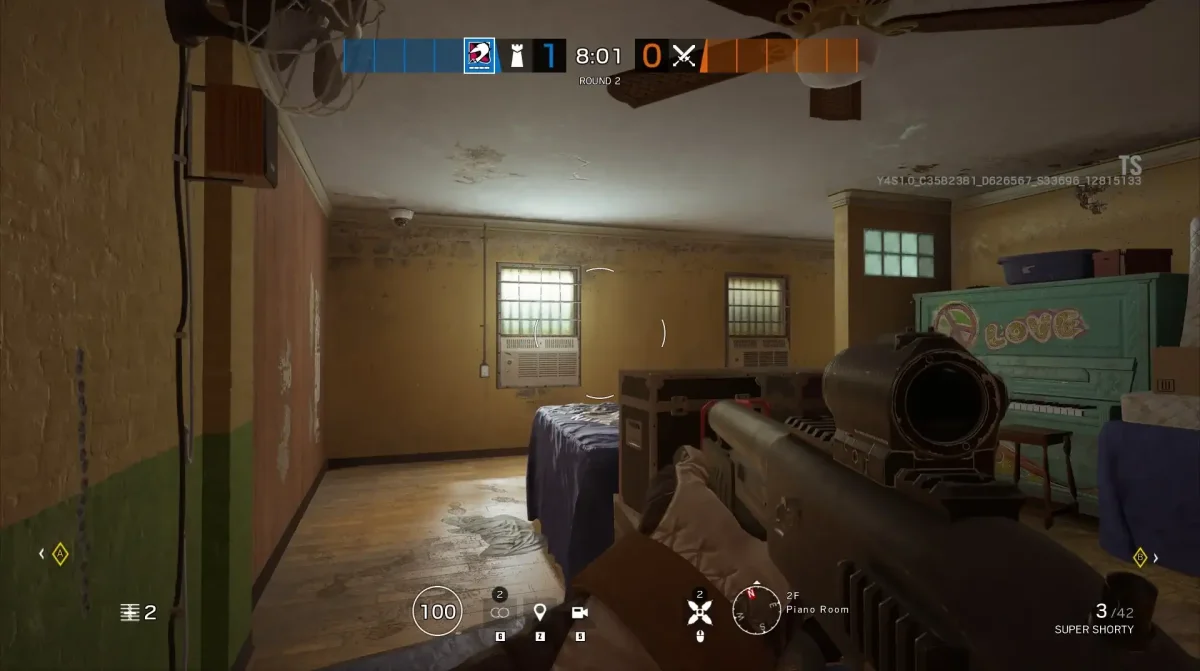
Rainbow Six Siege Ranked 3.0 replaces the hidden MMR structure with a more visible Rank Point system. Players complete five Placement Matches, receive a starting Rank, and then climb by consistently winning against similarly ranked teams.
The update also adds squad restrictions, five Champion divisions, expanded Competitive Rewards, adjusted map bans, and clearer post-match RP information.
To climb successfully, focus on teamwork, map knowledge, utility usage, communication, and objective play. Kills matter during a round, but winning matches is what moves your Rank forward.
Once you understand placements, RP changes, squad limits, and matchmaking, Ranked 3.0 becomes much easier to navigate and improve within.
Scratch the card below to reveal your exclusive coupon code.